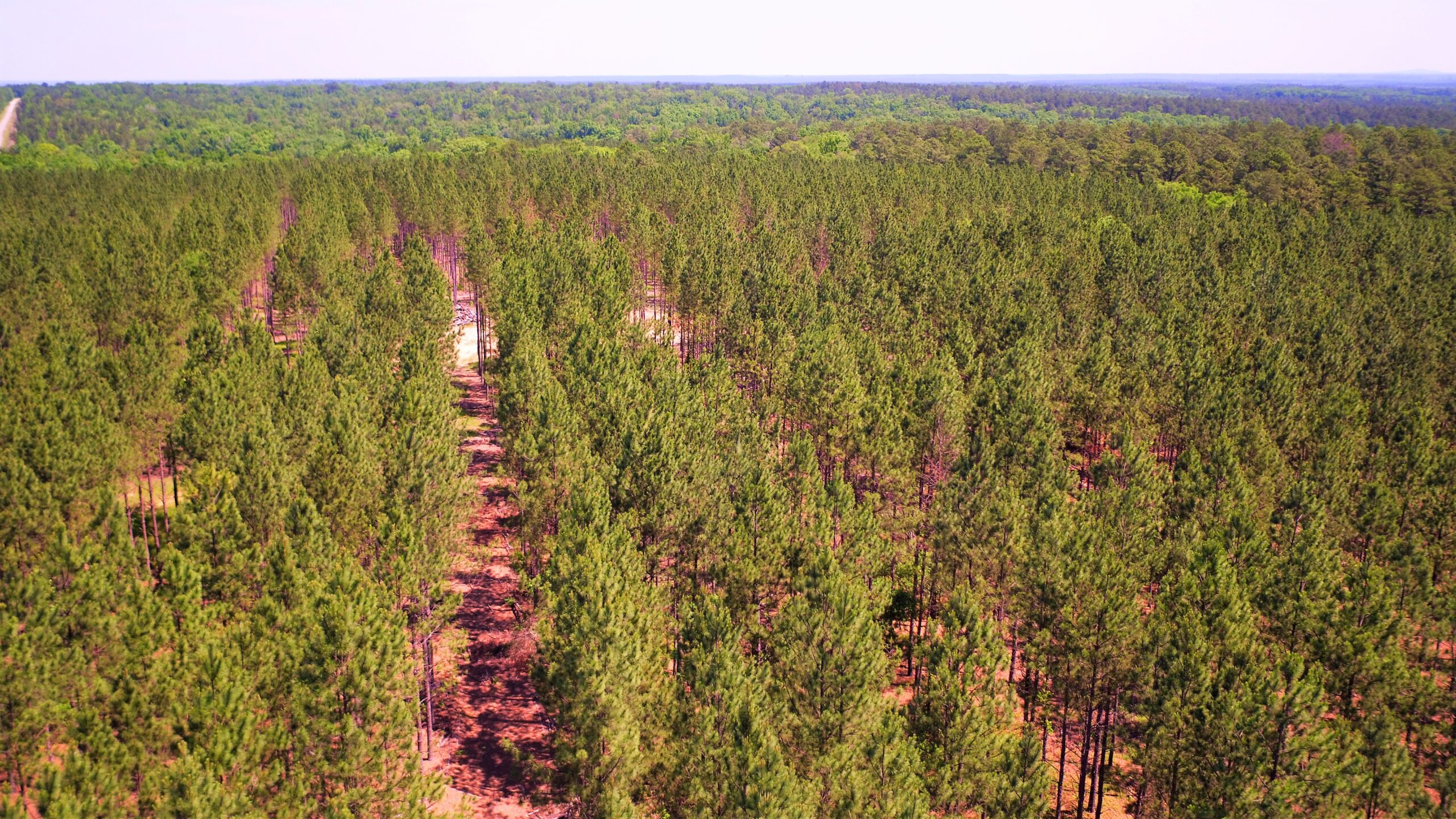
Pine plantations are a familiar sight throughout Georgia, particularly across the central and southern portions of the state.
For generations, landowners have planted and managed pine timber for income, long-term investment, and the many benefits associated with forest ownership.
However, pine plantations offer more than just timber production.
With appropriate management, these properties can also provide wildlife habitat, hunting opportunities, recreational enjoyment, and attractive rural real estate investments.
Understanding how pine timber changes throughout its growth cycle can help buyers and landowners better evaluate a property’s potential.
Two properties containing similar acreage of pine timber can have very different characteristics.
A recently planted pine plantation may offer dense cover and developing wildlife habitat, while a mature stand may contain valuable merchantable timber and established interior roads.
The age, stocking density, tree quality, and previous management practices all influence a plantation’s usefulness and economic potential.
For example, a property containing 15-year-old loblolly pines may offer a different combination of timber value and recreational opportunities than one containing 30-year-old trees.
Neither is necessarily the better property. The most desirable characteristics depend on the buyer’s goals.
During the early years following planting, pine plantations often contain a mixture of grasses, forbs, shrubs, and other naturally occurring vegetation.
This early growth can provide valuable food and cover for wildlife.
As the pines grow and the canopy begins to close, sunlight reaching the forest floor decreases. Over time, some of the vegetation that initially made the stand attractive to wildlife may become less abundant.
However, dense young pine stands can still provide security and bedding cover, particularly for whitetail deer.
For buyers primarily interested in hunting, the amount and arrangement of cover may be just as important as the property’s timber age.
A young pine plantation surrounded by agricultural fields, hardwood bottoms, or other productive habitat may offer excellent recreational opportunities.
Thinning is one of the most important management practices used in commercial pine production.
The process involves selectively removing trees to reduce competition and provide the remaining pines with additional growing space.
Thinning can allow healthier, better-formed trees to develop into higher-value timber products over time.
The first commercial thinning often occurs during the middle portion of a plantation’s growth cycle, although the appropriate timing depends on tree size, stand density, site productivity, and market conditions.
From a wildlife perspective, thinning can also create benefits.
When more sunlight reaches the forest floor, native vegetation may increase, providing additional forage and habitat diversity.
However, these benefits depend on how the property is managed after thinning.
A thinned stand with little understory vegetation may offer different wildlife benefits than one where desirable native plants are encouraged to grow.
Prescribed burning is another forest management practice commonly associated with pine timberland in Georgia.
When performed under appropriate conditions, prescribed fire can help manage competing vegetation, reduce accumulated fuels, and encourage certain native plant communities.
For landowners interested in hunting, these changes may help improve wildlife habitat.
Whitetail deer, wild turkey, and other species can benefit from suitable understory vegetation and habitat diversity.
However, prescribed burning is not appropriate for every stand at every stage of development.
Stand age, fuel conditions, weather, landowner objectives, and surrounding properties must all be considered.
Landowners interested in prescribed burning should work with experienced forestry professionals to develop an appropriate management approach.
One of the attractive characteristics of timberland is that the standing timber can represent a separate economic component of the property’s overall value.
As pine trees mature, they may become suitable for different forest products, including pulpwood, chip-n-saw, sawtimber, and poles.
Generally, larger, higher-quality timber products command higher prices per unit than smaller pulpwood material.
However, timber values vary considerably based on species, size, quality, available volume, logging conditions, and demand from nearby mills.
A property containing merchantable pine timber may appeal to investors seeking future harvesting income.
At the same time, other buyers may be more interested in hunting opportunities, road frontage, recreational improvements, or long-term land appreciation.
Consequently, the market value of timberland is not determined solely by the value of its trees.
Thinning can improve a plantation’s long-term productivity when performed at the appropriate time and according to a suitable management plan.
It may also increase the property’s appeal to certain recreational buyers by improving visibility, access, and opportunities for understory growth.
However, thinning does not automatically increase a property’s immediate market value.
A timber harvest removes standing inventory, which may reduce the value of the timber remaining on the property.
The landowner receives harvest proceeds in exchange for that removed inventory.
Any long-term financial benefit depends on the growth and quality of the remaining trees, harvest revenue, management expenses, and future timber markets.
Buyers should therefore evaluate both the timber that remains and the property’s future management potential.
For many Georgia landowners, the ideal property offers a combination of financial and recreational benefits.
A well-managed pine plantation may generate periodic timber income while providing opportunities for hunting and other outdoor activities.
Some landowners choose to incorporate food plots, shooting lanes, interior roads, and hardwood buffers into their forestry management plans.
Others may maintain portions of their property primarily for timber production while designating separate areas for wildlife management.
These objectives do not always conflict.
For example, thinning can improve the growth potential of selected timber while also creating opportunities for additional vegetation.
However, management decisions should reflect the landowner’s priorities. A forestry plan designed to maximize timber returns may differ from one emphasizing wildlife habitat and recreational use.
This is a question that many Georgia landowners face.
Harvesting mature timber before selling may provide immediate income while leaving the land available for a separate real estate transaction.
Alternatively, selling the property with the standing timber may attract buyers who value the existing timber inventory, recreational opportunities, or future harvest potential.
Neither approach is automatically more profitable.
Before deciding, the landowner should consider:
An experienced consulting forester can provide a timber inventory and help evaluate harvesting alternatives.
For property owners considering a sale, understanding both land value and timber value can help establish an appropriate marketing strategy.
When evaluating a Georgia property containing planted pines, several characteristics deserve attention.
Timber age and condition: How old are the trees, and have they been managed appropriately?
Past management: Has the plantation been thinned, fertilized, or otherwise maintained?
Access: Are there suitable roads for timber harvesting, hunting, and property maintenance?
Wildlife habitat: Does the property contain hardwoods, openings, natural vegetation, or other habitat features?
Timber marketability: Is the stand suitable for commercial harvesting, and are there practical routes for logging equipment?
Future ownership goals: Does the property offer the right combination of recreation, potential income, and long-term use?
These considerations can help buyers identify properties that match their needs rather than focusing exclusively on acreage or timber age.
One of the distinctive benefits of owning timberland is the ability to enjoy the property while managing a renewable natural resource.
Pine plantations can provide hunting opportunities, family recreation, and the satisfaction of improving rural acreage over time.
With thoughtful management, timber production and recreational landownership can complement one another.
For some buyers, the priority may be purchasing established merchantable timber. Others may prefer younger stands with opportunities for habitat improvement and long-term growth.
Understanding these differences can make it easier to evaluate available properties and recognize their potential.
At Mathis Land Group – Virtual Properties Realty, we specialize in Georgia land and rural real estate, including timberland, hunting properties, agricultural acreage, and recreational tracts.
Whether you’re looking to purchase pine timberland or considering selling an existing property, understanding its timber characteristics and recreational potential can help you make an informed decision.
Contact Mathis Land Group to discuss buying or selling timberland in Georgia.