When purchasing rural land in Georgia, road access is one of the most important characteristics to consider. While many properties have direct frontage along a public road, others are accessed through private roads, shared driveways, or easements across neighboring properties.
These arrangements are fairly common in rural areas and do not necessarily make a property undesirable.
However, understanding the difference between physical access and legal access can help buyers make informed decisions and avoid unexpected complications.
Let’s examine how landlocked properties and access easements work in Georgia.
A landlocked property is generally understood to be a parcel that lacks direct access to a public road and does not have an established legal right of access across surrounding properties.
For example, imagine a 40-acre tract completely surrounded by privately owned land, with no direct public-road frontage or legally established access easement.
That property would generally be considered landlocked.
However, a property without public-road frontage is not necessarily landlocked.
A 40-acre tract accessed by a recorded easement across a neighboring property may have perfectly legitimate legal access despite having no frontage of its own.
This distinction is important when evaluating rural real estate.
An easement is a legal right that allows someone to use another person’s property for a particular purpose.
In rural Georgia, access easements commonly allow property owners to travel across neighboring land to reach their own property.
For example, a landowner might own 25 acres located behind another parcel. A recorded easement could provide a designated route from the public road across the front property to the 25-acre tract.
The owner of the rear property does not necessarily own the land beneath the access road. Instead, the easement provides certain rights to use that designated area.
Depending on the terms of the easement, those rights may include vehicle access, road maintenance, or other specified uses.
The exact wording of the legal document matters.
Not all property access arrangements are the same.
An express easement is created through an agreement or conveyance establishing access rights.
These easements are often documented in recorded deeds or separate easement agreements.
A properly established easement benefiting a parcel can provide long-term access rights that continue when ownership changes.
Buyers should examine the recorded document to understand the location, width, permitted uses, and any maintenance responsibilities.
Some rural properties are accessed by private roads serving multiple landowners.
These arrangements may involve recorded easements, shared ownership, or maintenance agreements.
A private road can provide convenient access to several properties, particularly when larger tracts have been divided into smaller parcels.
However, buyers should understand who maintains the road and whether any agreements exist regarding maintenance expenses.
In certain circumstances, Georgia law recognizes access rights arising from necessity.
For example, when a larger property is divided and a parcel becomes inaccessible, the history of ownership and conveyance may support a legally recognized access right.
However, an easement by necessity does not automatically exist simply because a property lacks road frontage.
The particular ownership history and legal circumstances must support the claim.
Georgia law also recognizes certain access rights that may arise through long-term use.
Establishing a prescriptive private way involves specific statutory requirements. Merely driving across a neighboring property for several years does not necessarily establish a permanent legal right.
Because these situations depend heavily on the facts, buyers should not assume an existing trail or driveway represents a legally established easement.
Properties with direct public-road frontage often offer greater flexibility than properties requiring access through neighboring land.
Road frontage can simplify entry and may provide additional options for future homesites, agricultural operations, and other improvements.
It may also reduce the need for shared access arrangements.
However, road frontage alone does not guarantee that a property has an approved driveway entrance or that every proposed use will be permitted.
A property’s location, road classification, terrain, and applicable local requirements can influence how access may be developed.
In many situations, yes.
Rural residential properties are sometimes served by recorded access easements or shared private roads.
However, legal access and compliance with residential development requirements are separate questions.
Before purchasing land for a future home, buyers should consider whether the access arrangement satisfies applicable county requirements and whether the driveway or private road will accommodate necessary construction and emergency vehicles.
Some local jurisdictions may have minimum access-width or road-construction requirements for new residential development.
An easement that allows an owner to reach recreational property is not necessarily sufficient for every proposed residential use.
Absolutely.
Some landlocked properties may offer attractive opportunities for timber production, hunting, recreation, or long-term ownership.
Limited access can reduce the number of interested buyers, but it does not eliminate the property’s usefulness or value.
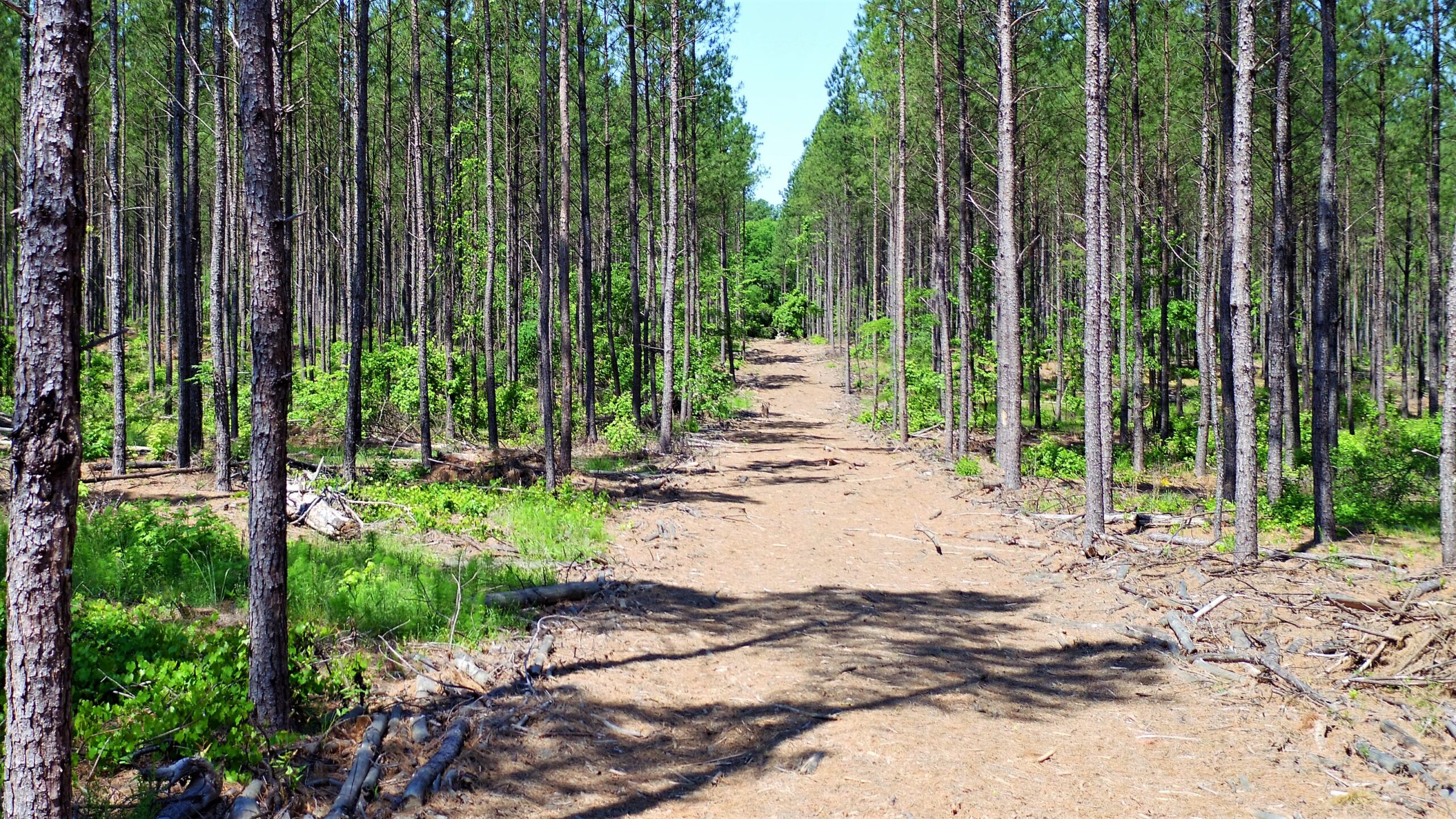
For example, an interior tract of pine timber may have productive timber resources even though it lacks direct public-road frontage.
The important consideration is how the property can legally and practically be accessed for its intended use.
A buyer purchasing property primarily for recreation may have different access requirements from someone planning to build a home or establish a commercial operation.
When a property lacks established legal access, several potential solutions may be available.
One option is negotiating an easement with a neighboring landowner.
In some situations, adjoining owners may be willing to establish a permanent access arrangement through a recorded agreement.
Georgia law also provides certain legal procedures for establishing private ways under qualifying circumstances.
However, these procedures have specific requirements and may involve legal expenses, compensation, and court proceedings.
Buyers should not assume that access across neighboring property can always be obtained.
Resolving access before purchasing is generally preferable to relying on uncertain future arrangements.
When evaluating a property accessed by a private road or easement, several questions deserve attention:
A title examination, survey, and review of recorded documents can help clarify these issues.
When access rights are uncertain, a qualified Georgia real estate attorney can evaluate the legal documents and advise on potential solutions.
Access is an important part of evaluating rural land, but it should be considered alongside location, terrain, timber, utilities, recreational potential, and the buyer’s intended use.
Properties with direct road frontage may offer additional flexibility, while properties accessed by easements can still be excellent choices.
The key is understanding what you’re purchasing and how the property can be used.
At Mathis Land Group – Virtual Properties Realty, we specialize in Georgia land and rural real estate.
Whether you’re searching for a private homesite, hunting property, recreational acreage, or an agricultural tract, we’re here to help you evaluate available properties and identify opportunities that match your goals.
Contact Mathis Land Group to discuss your Georgia land search.