
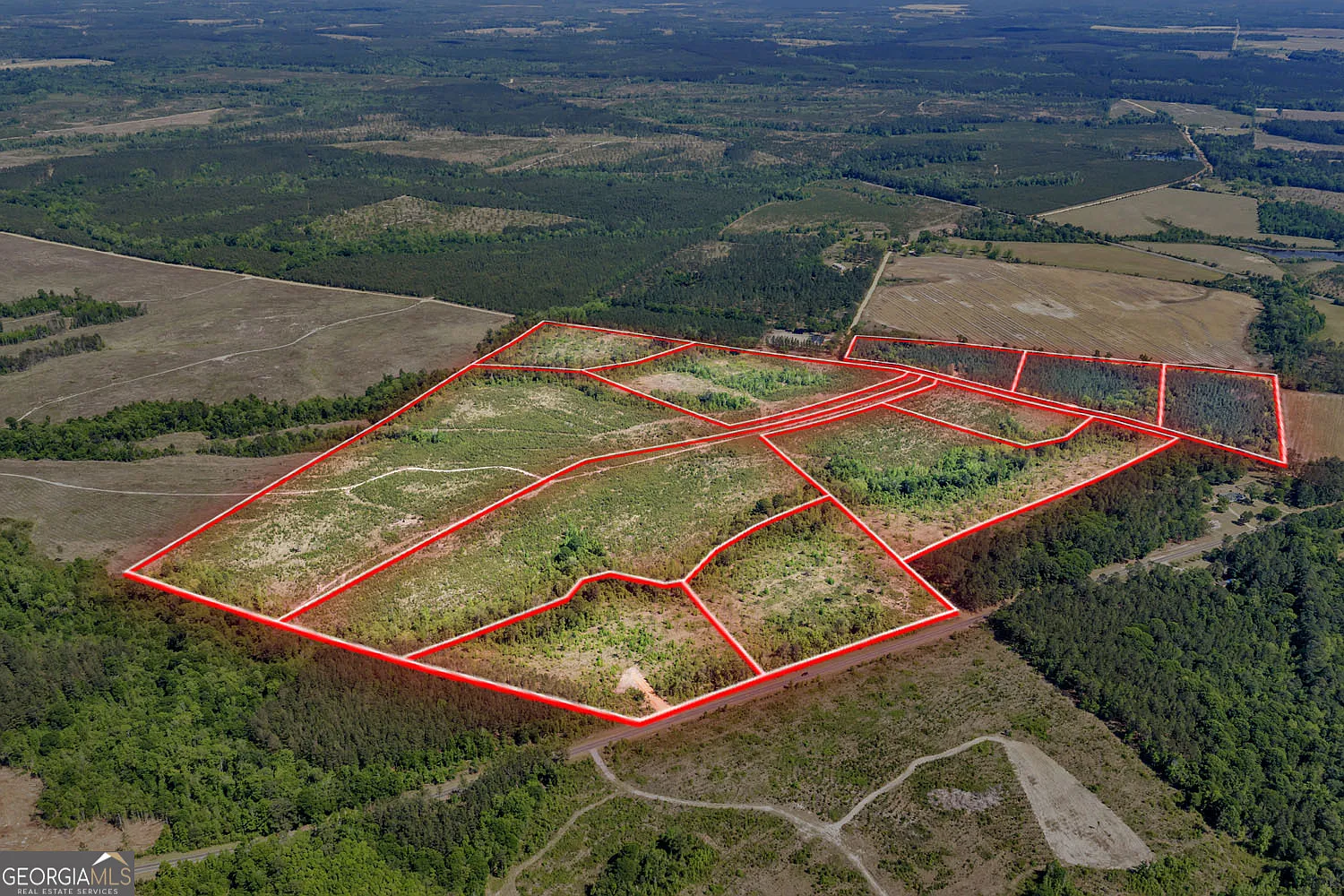
If you own a larger tract of land in Georgia and are considering selling, one question worth asking is whether your property would be more valuable as a single tract or divided into smaller parcels.
Many rural landowners are surprised to learn that smaller tracts can sometimes command significantly higher prices per acre than larger properties.
However, subdividing land isn’t always the most profitable approach.
The best strategy depends on the property’s location, road frontage, characteristics, local buyer demand, and the expenses associated with dividing and marketing the land.
Let’s examine when dividing your property may make financial sense and when selling it intact could be the better option.
One of the biggest differences between marketing large and small acreage properties is the number of potential buyers.
Consider a hypothetical 100-acre property priced at $500,000.
Although the price may be reasonable for the market, the total purchase price limits the number of buyers who can afford the property.
Now imagine dividing that same acreage into smaller tracts ranging from 5 to 20 acres.
These properties could appeal to buyers looking for:
Because smaller properties generally have lower total purchase prices, they may attract a broader audience.
In some markets, the additional demand can translate into a higher price per acre.
However, the amount buyers will pay depends on the characteristics and desirability of each individual tract.
Road frontage is often one of the most important considerations when determining whether a larger property can be divided effectively.
A tract with substantial frontage along a public road may offer the opportunity to create several smaller parcels, each with independent access.
This can be especially attractive for buyers interested in building homes or establishing small farms.
On the other hand, a property with limited frontage may require shared access, easements, or additional road improvements.
Consider two hypothetical 80-acre properties.
The first has 2,000 feet of frontage along a county-maintained road.
The second has only 150 feet of public-road frontage.
Although both contain the same acreage, the first may offer considerably more flexibility for creating smaller tracts with independent entrances.
That flexibility can influence the property’s marketability and its potential subdivision value.
When subdividing rural land, it is important to recognize that different portions of the same property may have different values.
A larger tract may include open pasture, planted pines, mature hardwoods, wetlands, ponds, creeks, and several potential homesites.
Some areas may be particularly attractive for residential use, while others may appeal more to hunters, farmers, or timberland buyers.
For example, a 10-acre tract containing attractive open pasture and suitable road access may appeal to a different buyer than a 10-acre tract consisting almost entirely of wooded bottomland.
Both properties may have value, but their marketability and intended uses are different.
A thoughtful division should consider these differences instead of simply creating equal-sized parcels.
In many situations, a combination of larger and smaller tracts can be more effective than dividing a property into uniform lots.
Let’s consider a hypothetical 100-acre Georgia property.
Assume the property could be sold intact for $500,000, or potentially divided into ten 10-acre tracts.
| Selling Strategy | Gross Sales |
|---|---|
| Sell entire 100 acres at $5,000 per acre | $500,000 |
| Sell ten 10-acre tracts at $65,000 each | $650,000 |
| Additional potential gross revenue | $150,000 |
At first glance, dividing the property appears considerably more profitable.
However, the additional $150,000 represents gross revenue, not additional profit.
Surveying, property improvements, transaction expenses, and the time required to sell multiple parcels must also be considered.
The smaller tracts must also be marketable at the assumed prices.
These figures are illustrative and are not intended to represent actual market values or projected selling prices for a particular property.
Dividing a larger property generally involves additional expenses.
Depending on the land and the proposed division, these may include:
Surveying and plat preparation: A surveyor may need to establish new boundaries, calculate acreage, and prepare a subdivision plat.
Local review requirements: County or municipal subdivision regulations may establish requirements concerning lot dimensions, road frontage, and access.
Road and entrance improvements: Some proposed tracts may require driveway entrances, culverts, or other access improvements.
Property preparation: Clearing selected areas, establishing property corners, or improving existing access may increase marketability.
Additional closing expenses: Selling several parcels involves multiple transactions rather than one.
The amount of work required can vary significantly.
A relatively straightforward division of property with adequate existing road frontage may involve substantially less expense than a subdivision requiring new interior roads or extensive infrastructure.
Another important consideration is how long it may take to sell the individual parcels.
Selling one 100-acre property requires finding one buyer.
Dividing that property into ten tracts may require finding ten different buyers, completing multiple negotiations, and coordinating several closings.
While smaller tracts can attract a larger buyer pool, they do not necessarily sell simultaneously.
The owner may continue paying property taxes, insurance, loan interest, and maintenance expenses on the unsold acreage.
For some landowners, the opportunity to generate a higher total selling price justifies the additional time.
Others may prefer a simpler sale that converts the property into cash sooner.
Neither strategy is automatically superior.
Let’s expand our earlier hypothetical example.
| Financial Comparison | Sell Intact | Sell as 10 Tracts |
|---|---|---|
| Gross sales revenue | $500,000 | $650,000 |
| Surveying and subdivision expenses | $0 | $12,000 |
| Additional property improvements | $0 | $15,000 |
| Marketing, carrying, and miscellaneous costs | $0 | $10,000 |
| Proceeds before ordinary selling costs and taxes | $500,000 | $613,000 |
Under these assumptions, the subdivision strategy generates an additional $113,000 before ordinary selling costs and taxes.
That may be an attractive outcome.
However, the actual difference would depend on market demand, realized sale prices, time on market, and the property’s specific expenses.
The owner should also consider what those proceeds could earn if the entire property were sold sooner.
This opportunity cost becomes especially relevant when multiple tracts take an extended period to sell.
Yes, and in some situations this may be an attractive alternative.
A landowner may choose to market a larger property as an entire tract while also offering potential smaller parcels.
For example, an approximately 120-acre property could be marketed in its entirety or as two separate tracts, provided the proposed divisions are feasible and clearly disclosed.
This approach can appeal to both larger-acreage buyers and individuals interested in smaller properties.
It also provides flexibility during negotiations.
However, the marketing strategy should clearly distinguish existing legally established parcels from proposed divisions that remain subject to surveying, required approvals, and other conditions.
The ability to close individual-tract sales depends on completing the necessary division requirements.
Before dividing land, owners should consider whether any existing agreements affect the property.
For example, land securing an outstanding mortgage may require the lender’s approval to release individual parcels from the loan.
Properties enrolled in Georgia’s Conservation Use Value Assessment (CUVA) or Forest Land Protection Act (FLPA) programs may also require special consideration.
Selling portions of enrolled land can affect existing conservation-use covenants, depending on the program, buyer qualifications, required continuation procedures, and intended uses.
An owner should investigate these matters before committing to a particular subdivision strategy.
Addressing them early can help avoid unnecessary complications during the selling process.
Although dividing land can increase the total selling price in some circumstances, larger properties offer benefits that may be diminished by subdivision.
For example, an established farm with connected fields, fencing, and water resources may appeal to buyers who want a complete agricultural operation.
A large hunting property may benefit from contiguous acreage, privacy, interior access, and the ability to manage wildlife across a substantial area.
Similarly, investors interested in commercial timber production may prefer larger blocks of managed timberland.
Selling intact may be particularly attractive when:
The objective should be to identify the strategy that provides the most favorable overall result for the landowner.
Determining whether to divide a property requires more than comparing acreage and asking prices.
A meaningful evaluation should consider the property’s characteristics, likely buyers, expenses, market conditions, and the landowner’s financial objectives.
In some cases, creating several smaller tracts may produce a higher overall return.
In others, selling the entire property may provide a stronger balance of price, timing, and simplicity.
A third alternative is marketing the property with both individual-tract and combined-acreage purchase options.
Every property is different, and the most effective approach should reflect its particular opportunities.
At Mathis Land Group – Virtual Properties Realty, we specialize in Georgia land and rural real estate.
From small homesites and recreational properties to larger agricultural and timberland tracts, we understand the importance of developing a selling strategy around the property itself.
Whether you’re considering selling an entire property or exploring the potential of smaller tracts, we can help evaluate its marketability and available options.
Contact Mathis Land Group to discuss selling your Georgia land.